BY: KATIE SMITH & NATALIE BEYER
Your spine is the central support system for your entire body. It plays a role in posture, breathing, balance, and nearly every movement you make throughout the day. When spinal mobility is limited, tension often shows up as stiffness, discomfort, or a feeling that your body just isn’t moving the way it should.
This week focuses on restoring gentle movement through the spine to help improve posture, reduce lingering tension, and support more comfortable, efficient movement. When the spine moves well, the rest of the body tends to follow.
Spinal mobility does not require force or aggressive stretching. Small, controlled movements done consistently can help your body feel more upright, balanced, and supported in everyday life.
Joseph Pilates once said, “You are only as young as your spine is flexible.”
Cat Cow Spinal Stretch
Begin on your hands and knees in with your wrists under your shoulders and knees under your hips. As you inhale, gently arch your back, lifting your chest and tailbone while letting your belly soften toward the floor. As you exhale, round your spine, drawing your chin toward your chest and gently tucking your tailbone. Move slowly between these positions, allowing your breath to guide the motion. This stretch encourages healthy spinal movement and helps release built up tension.
.gif?width=500&height=281&name=Untitled%20design%20(6).gif)
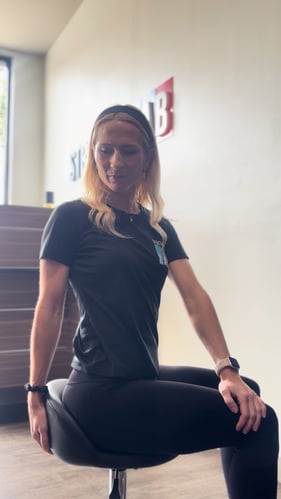
Seated Spinal Rotation
Sit tall on the floor or in a chair with your feet grounded. Place your right hand behind you and your left hand on your right knee. Keeping your spine long, gently rotate your torso to the right, moving from your ribcage rather than forcing the twist. Breathe steadily, then switch sides. This stretch supports spinal mobility and helps improve posture and ease of movement.
Wall Supported Spinal Roll Down
Stand with your back against a wall and your feet a few inches away from it. Begin by gently tucking your chin toward your chest and slowly rolling your upper spine away from the wall one segment at a time. Allow your shoulders and upper back to peel forward as your arms hang naturally. Keep your knees soft and move only as far as feels comfortable. To return, slowly stack your spine back up against the wall, bringing your head up last. This movement encourages spinal awareness, improves mobility, and helps release tension built up from prolonged sitting.
.gif?width=281&height=500&name=Untitled%20design%20(9).gif)
In addition to gentle mobility work, finding opportunities to let your spine decompress can be incredibly beneficial. Hanging allows gravity to create space between the joints of the spine, which can help relieve built up pressure, improve circulation, and reduce tension from prolonged sitting or repetitive movement. This does not need to be a full hang from a bar. At home or work, you might place your hands or fingertips at the top of a door frame, soften your knees, and allow your body weight to gently pull downward. Even short moments of decompression a few times per week can help your spine feel lighter, longer, and more at ease.
You may even notice this effect in daily life. Gravity places constant pressure on the spine, which is why many people are slightly taller in the morning than they are by the end of the day. If you measure your height when you wake up and again before bed, you may see this change for yourself. Creating space through gentle decompression helps counteract that daily compression and supports long term spinal health.
When your spine moves freely, posture becomes easier to maintain and everyday activities feel less taxing. This reset helps your body feel more aligned, supported, and ready to move with greater ease.
Ready to Realign Your Routine?
Discover how guided assisted stretching can improve mobility, restore balance, and support how your body moves every day. Book your first session today.