Quick TakeawayAfter 40, most people notice the body asks for a little more attention. Joints feel stiffer in the morning, long days of sitting leave hips and backs tight, and recovery takes longer. None of this means you have to slow down. Mobility, the ability to move your joints freely through a useful range, responds well to regular, intentional movement. The goal is to protect the everyday movements your life depends on: standing up, reaching, turning, bending, walking and balancing. |
What Changes With Mobility After 40?
Mobility does not drop off a cliff at 40. It changes gradually, and daily habits shape how much. Common shifts include:
- Less range of motion from less variety. Desk work, driving and screens keep the body in a few positions for hours. Joints you do not move through their full range tend to feel stiffer over time.
- Gradual loss of muscle. Muscle mass and strength decline slowly with age unless you keep training them. Weaker muscles around the hips, spine and shoulders make movement feel less free.
- Slower recovery. A hard workout, a long weekend of yard work or a round of golf can leave you sore for longer than it used to.
- Stiffness after sitting. Many people feel it first when they stand up after a long meeting or a long drive.
- Less balance practice. Balance gets sharper when you use it, and most adult routines do not include much of it.
The encouraging part is that these changes are influenced by what you do. People who keep moving, strength training and stretching regularly tend to keep more of the movement they have.
Six Everyday Movements Worth Protecting
Think of these as the movements that keep daily life easy. Each one includes a quick at-home check and a simple way to practice it. Move gently, stay within a comfortable range and stop if anything hurts.
1. Getting up from a chair or the floor
Why it matters: You repeat this movement dozens of times a day. It relies on hip and ankle mobility plus leg strength.
Quick check: Can you stand up from a low chair without using your hands?
Try this: Practice sit-to-stands, slowly, 8 to 10 reps.
2. Reaching overhead
Why it matters: Putting dishes away, loading a car or swinging a golf club or tennis racket all need shoulder and upper back mobility.
Quick check: Stand with your back against a wall. Can you raise both arms overhead and keep your ribs and lower back against the wall?
Try this: Wall slides, 8 to 10 slow reps.
3. Turning to look behind you
Why it matters: Backing out of a driveway, checking a blind spot and playing racquet sports all depend on spinal rotation.
Quick check: Sit tall and turn your head and trunk to each side. Is one side noticeably tighter?
Try this: A seated trunk rotation, 5 slow breaths each side.
4. Squatting and bending to pick things up
Why it matters: Groceries, kids, laundry and garden work all start with a hinge or a squat. Hip and ankle mobility make that easier on your back.
Quick check: Can you lower into a comfortable squat with your heels on the floor?
Try this: Bodyweight squats to a chair, then a standing hip hinge.
5. Walking with a full stride
Why it matters: Tight hip flexors from sitting can shorten your stride. A longer, freer stride makes every walk, hike and round of pickleball easier.
Quick check: After a long day of sitting, does the front of your hips feel tight when you stand tall?
Try this: A half-kneeling hip flexor stretch, 30 to 45 seconds per side. Our post on 3 reasons to stretch your hip flexors goes deeper.
6. Standing on one leg
Why it matters: Stairs, curbs and uneven ground all ask you to balance briefly on one leg.
Quick check: Can you stand on one leg for 20 to 30 seconds without grabbing support?
Try this: Practice near a counter, working up to 30 seconds per side.
A Simple Routine For Busy Days
You do not need an hour. Try ten minutes, three or four days a week:
- Sit-to-stands, 8 to 10 reps
- Wall slides, 8 to 10 reps
- Seated trunk rotation, 5 breaths each side
- Half-kneeling hip flexor stretch, 30 to 45 seconds per side
- Single-leg balance, 20 to 30 seconds per side
For more ideas you can do at your desk, see easy flexibility exercises to stay mobile at any age and stretches for less pain after your commute.
Where Assisted Stretching Fits
Stretching on your own is a good habit. It also has limits. When you stretch alone, you choose the positions, you guess where you are tightest, and it is hard to relax fully into a stretch while you are also holding yourself in position.
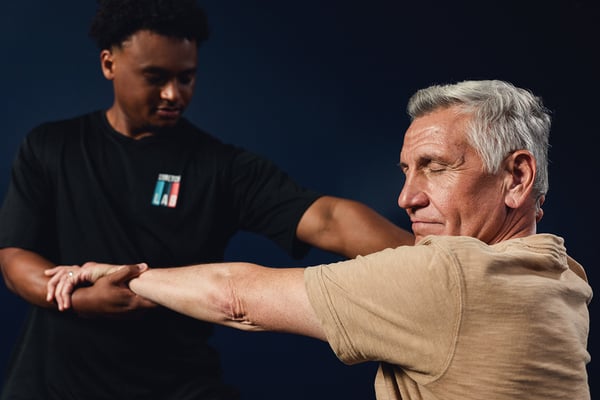
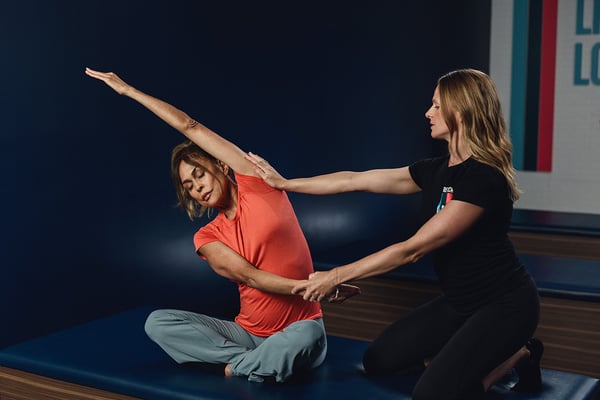
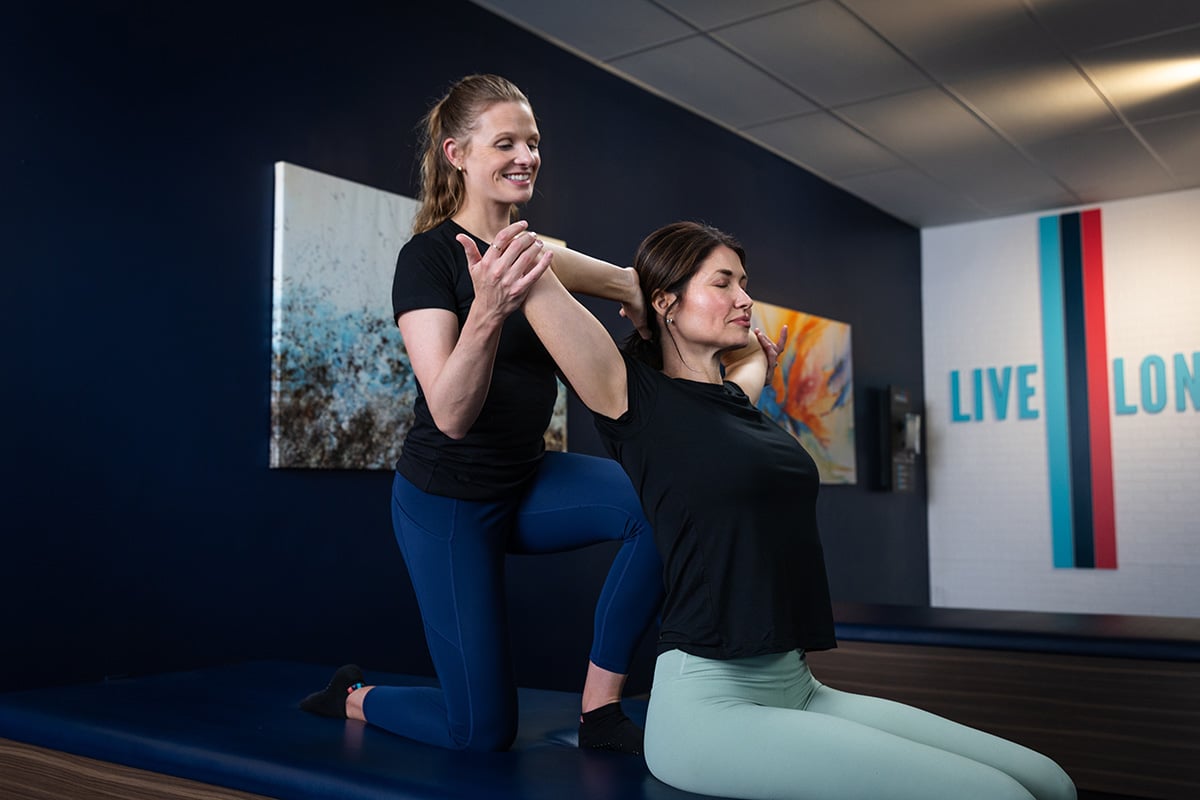
At StretchLab, a certified Flexologist guides you through a one-on-one session on the bench. Flexologists complete a 40+ hour certification program built on a background in anatomy and movement. Your first visit includes the StretchLab Movement Assessment, which helps your Flexologist understand how you move today and build a personalized plan around your goals. Sessions run 25 or 50 minutes.
For readers over 40, that can mean:
- A plan built around your body, your schedule and your activities, whether that is golf, pickleball, running or a long workday
- Hands-on assistance that helps you reach positions that are hard to get into alone
- A regular appointment that makes consistency easier than going it alone
Learn more about what to expect from your first assisted stretch, or find a studio near you.
A Member's View: Making Mobility a Priority at 42
At 42, Jess balances a busy career, motherhood, and a love of golf. Between long hours at a desk, family responsibilities, and staying active, she's become more intentional about making mobility part of her wellness routine.
"Between sitting at a desk all day, keeping up with my son, and playing golf, I ask a lot of my body. As I've gotten older, I've realized how important it is to prioritize mobility, not just for how I feel today, but for how I want to move 10 or 20 years from now. Stretching is one of those things that's easy to put off, so I love having dedicated time to focus on it."
For Jess, it's about building healthy habits now that support an active lifestyle for years to come.
Individual experiences vary.
What Jess's Story Shows
Jess's experience reinforces an important message for adults over 40: mobility is worth prioritizing before everyday movement becomes more challenging.
- Desk work adds up. Long hours sitting can contribute to tightness and stiffness, making intentional movement especially important.
- Mobility supports an active lifestyle. Whether it's golf, exercise, or keeping up with kids, flexibility and range of motion play a role in everyday activities.
- Consistency matters. Setting aside dedicated time for stretching can help make mobility a regular part of a wellness routine.
- It's about the long game. Taking care of mobility today can help support the activities you want to enjoy as you age.
You don't have to wait until movement feels limited to make mobility a priority. Building consistent habits in your 40s can help support the way you want to move for years to come.
FREQUENTLY ASKED QUESTIONS
Ready to protect the movements that matter to you? Find a StretchLab studio near you and book a session.
Finda a Studio.