Recovery from a muscle injury moves through stages, and stretching supports several of them.
Why Stretching Supports Recovery
A 2012 clinical commentary describes stretching as a common part of rehabilitation, used to increase muscle length and range of motion and to align collagen fibers in healing muscle. It also changes how a stretch feels: most static stretching studies find range of motion improves because people tolerate more stretch, not because the muscle itself lengthens. That is good news for recovery, because comfortable movement helps you return to daily activity. A review of 47 studies found a small but significant range of motion gains, and five of six controlled trials found stretching programs reduced musculoskeletal pain.
Read Assisted Stretching for Plantar Fasciitis Recovery
Matching the Type to Your Recovery Stage
Guidelines for muscle injuries describe five stages: protection and gradual loading first, then supervised, pain-free stretching alongside strengthening, then sport-specific reconditioning.
|
Type |
What It Does |
Where It Fits |
Tip |
|
Static (active) |
Builds range of motion and stretch tolerance |
Second stage onward |
Hold about 30 seconds |
|
Passive (assisted) |
Lets a partner support a relaxed muscle |
Second stage, with clearance |
Aim for gentle tension |
|
PNF |
Adds a contraction to gain range |
With clearance and a trained partner |
Keep communicating |
|
Dynamic |
Prepares muscles for movement |
Warm-ups and return to activity |
Move with control |
|
Ballistic |
Fast bouncing at end range |
Late reconditioning, if at all |
Generally not recommended |
Static and Passive Stretching
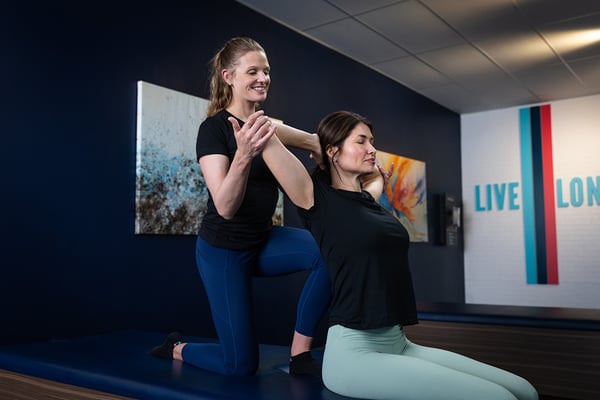
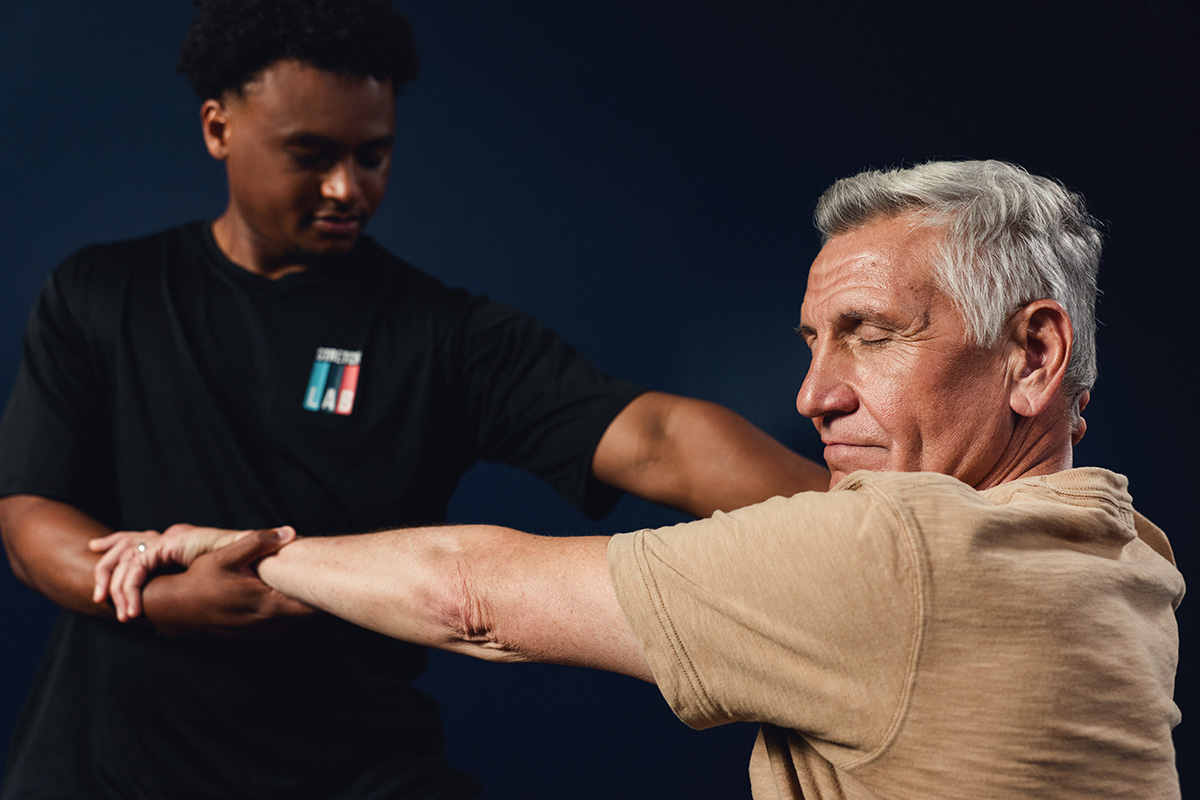
Static stretching holds a muscle in a lengthened position, actively by you or passively by a partner. Here, "active" means holding a stretch with your own muscles. Passive stretching uses an outside force, such as a partner, towel, or fitness strap, according to Cleveland Clinic, and assisted stretching is passive stretching with a partner. Mayo Clinic suggests holds of about 30 seconds, and the commentary cites American College of Sports Medicine guidance of 15 to 30 seconds. One study found static stretching worked better than dynamic stretching for hamstring strain recovery.
Proprioceptive Neuromuscular Facilitation (PNF) Stretching
Proprioceptive neuromuscular facilitation (PNF) stretching adds a muscle contraction to an assisted stretch. A Flexologist moves the joint to a comfortable end range, the guest contracts the muscle against resistance, then relaxes, and the stretch is deepened. Protocols vary, from about 10 seconds in the clinical commentary to five to 10 seconds at Cleveland Clinic. Many studies show larger immediate gains than static stretching, while the 47-study review found no difference between techniques, so the best fit depends on the person.
Dynamic and Ballistic Stretching
Dynamic stretching uses controlled movement without holding an end position, according to Behm et al. Unlike static stretching before exercise, it is not linked to strength losses, and the commentary recommends it as a warm-up before sport. Ballistic stretching adds bouncing at the end of the range. The commentary says it is no longer recommended because of injury risk, and muscle injury guidelines introduce ballistic exercises only in the fourth stage.
How to Stretch Safely
- Check with a doctor or physical therapist first, so stretching starts at the right time for your recovery
- Stretch to mild tension, not pain, and avoid bouncing
- Keep talking with your partner during assisted stretches
- Stretch consistently: Mayo Clinic suggests at least two to three times a week
- Stop and see a clinician for sharp pain, swelling, or numbness
Where Assisted Stretching Fits
Every StretchLab Flexologist must complete our proprietary Flexologist Training Program, an intensive and thorough series of required lessons and hands-on training in the muscular system and proper assisted stretching technique, before servicing guests. Flexologists use passive and PNF techniques once a guest shares their injury history and has clinician clearance.
Get Stretched by the Best
StretchLab’s proprietary Flexologist Training program is the only accredited certificate program recognized by the Institute for Credentialing Excellence for assisted stretching.