
I am a tennis player and triathlete. After I was hit by a car on my bike and sustained a hip injury, I was willing to do anything and everything to get back to my athletic ability and not be in chronic pain. I started dutiful physical therapy and strength training. A friend mentioned I should also check out StretchLab to round out my recovery and fitness journey. I have always had tight hips and hamstrings anyway, so I thought why not? This location has an amazing peaceful vibe. Everyone is very professional. It seems wild to pay someone to stretch you, but I have been blown away by the results and feeling. Specifically, Amy and Emily are just amazing and super kind as well. It isn't a big risk to just do one of the 'tryout' sessions, so give it a shot and you might find yourself getting a monthly membership and being very glad you did. I am very happy to be in a place now, a year later after the accident and injury, where I no longer live in daily and nightly discomfort and flareups after activities. Of course healing from this has been a scattershot of many modalities and there is no one simple 'cure' but StretchLab has been a cherished part of my healing journey. Thank you for helping me get back into my previous body, and in some ways now, even better and more flexible and still improving. So grateful for you.

|
Quick Takeaway: Yes, assisted stretching can support mobility once an injury is past the acute phase and a clinician has cleared you. It is a wellness service, not medical care or physical therapy. Many people start with physical therapy and use assisted stretching afterward to maintain range of motion. |
An injury raises two questions: who should lead your recovery, and when does stretching fit? Let’s discuss the two roles so you can plan your next step with your clinician.
When Assisted Stretching Fits
Assisted stretching suits guests who are past the early stage of an injury and want to restore comfortable movement. It can fit when you have:
- General tightness that limits everyday movement
- Mobility goals after physical therapy has ended
- A minor strain where sharp pain has settled into stiffness
See a physician or licensed physical therapist first if you have:
- Sharp or worsening pain
- Swelling or bruising
- A suspected tear or fracture
- Numbness or tingling
- Recent surgery
Recovery Phases at a Glance
Timing varies by injury, so your clinician sets the pace. This table shows who typically leads at each phase.
|
Phase |
Who Leads |
Where Assisted Stretching Fits |
|
Acute, first days |
Physician or physical therapist |
Wait for clinician clearance |
|
Early rehabilitation |
Physical therapist |
With clearance, gentle and pain-free |
|
Return to activity |
Physical therapist and coach |
Can support mobility goals |
|
Maintenance |
You and your Flexologist |
Fits ongoing mobility work |
Assisted Stretching vs Physical Therapy
Both can belong in the same recovery plan because they serve different purposes.
|
Physical Therapy |
Assisted Stretching |
|
|
Provider |
Licensed physical therapist |
Flexologist |
|
Focus |
Diagnosis and rehabilitation |
Mobility and flexibility |
|
How to Start |
Direct access or referral |
Book directly |
|
Best For |
Injury diagnosis and recovery plans |
Mobility after clearance |
Physical therapy describes care from a licensed physical therapist. StretchLab sessions are not physical therapy.
What Stretching Can and Cannot Do
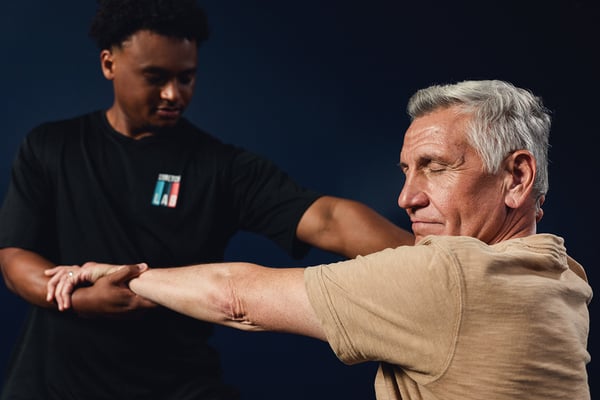
Assisted stretching involves a trained professional guiding your body through stretches to help improve flexibility and range of motion. All sessions incorporate passive stretching and active muscles engagement. This means a Flexologist is supporting you in your stretching while safely instructing you through PNF style stretches.
Cleveland Clinic notes it can increase range of motion and reduce stiffness. Stretching is only one part of recovery, though. For muscle injuries, rehabilitation also includes progressive strengthening under a physical therapist, so stretching alone is not a complete plan.
What a Session Looks Like After an Injury
Every StretchLab Flexologist must complete our proprietary Flexologist Training Program, an intensive and thorough series of required lessons and hands-on training in the muscular system and proper assisted stretching technique, before servicing guests. StretchLab states that its Flexologists hold a nationally recognized assisted-stretching certificate accredited by the Institute for Credentialing Excellence.
Your Flexologist uses Personal Movement Assessment results, from a 3D body scan of mobility, stability, posture, and symmetry, to focus your session. Guests share their injury history so the session can be adjusted, and stretching stays below sharp pain.
Watch a StretchLab guest share their experience with assisted stretching.